


The “findings report on the bidt-Digitalbarometer 2025” provides findings from extensive survey data on the current status of digital transformation in Germany. It also contains comparisons with 2021 and other European countries. More than 9,000 people were surveyed online and by telephone on topics such as user behaviour, digital competence, AI competence and the digital transformation of the world of work.
Overview
The digital transformation is permeating all areas of life, from education and the world of work to private life and interaction with state institutions. This results in far-reaching transformation requirements for the economy, society and the state. A key prerequisite for participating in this change is the availability of sufficient digital competence.
The “findings report on the bidt-Digitalbarometer 2025” provides results and analyses from a population survey on the digital transformation in Germany. A total of 9,031 people were surveyed from 22 January to 6 March 2025. The results of the survey allow a comparison with the data collected in 2021 for the “bidt-SZ-Digitalbarometer” for Germany as well as an international comparison with data from the “bidt-Digitalbarometer.international”. The results are representative of the resident population aged 14 and over in Germany.
To the bidt-SZ-Digitalbarometer
To the Digitalbarometer.international
Usage behaviour and attitudes
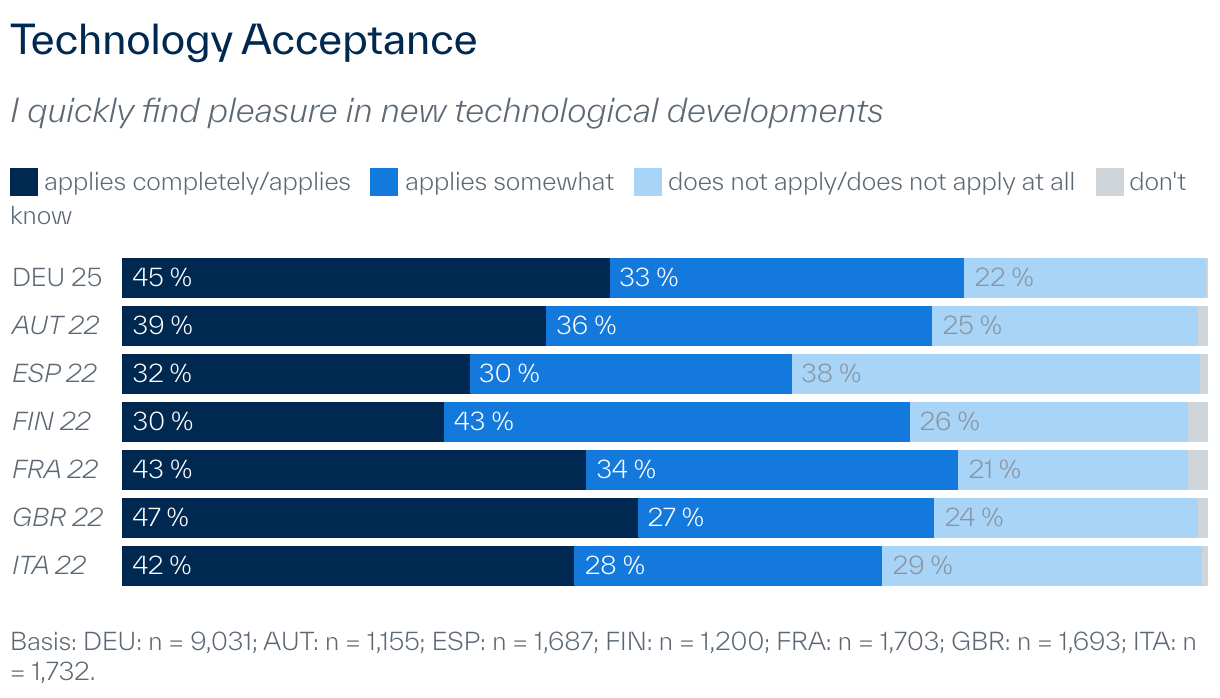
Although the use of digital technologies in general and government online services in particular has increased in Germany since 2021, the latter in particular lags behind other countries in a European comparison. Acceptance of technology among the German population is relatively high compared to other European countries, at the same time there is dissatisfaction with the attention paid to digitalisation in this country. In order to strengthen trust and acceptance among the population, the state in particular should create positive user experiences through the sustainable digitalisation of its services and thus better seize the opportunities of digital change.
Klicken Sie auf den unteren Button, um den Inhalt von Datawrapper zu laden.
Digital competence
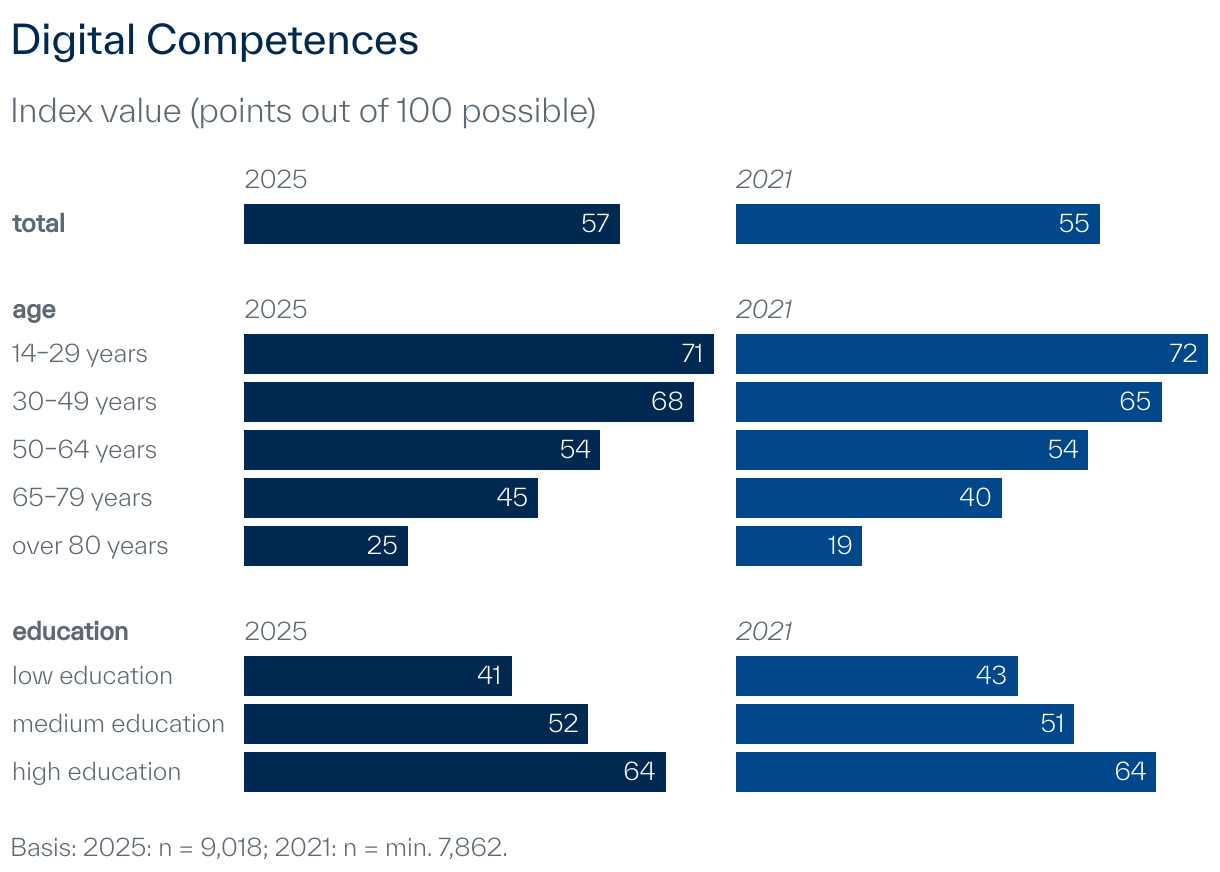
Although the majority of the population considers digital competence to be important, there are still significant differences in digital competence between different population groups (measured using the DigCompSAT self-assessment test). These differences are also evident in the AI competence surveyed for the first time in “the bidt-Digitalbarometer” among online users. The digital competence gap remains a key problem in Germany, even if the gaps between age groups, for example, have narrowed slightly since 2021. For people with low digital competence in particular, this sometimes leads to concrete restrictions in everyday life. Older people are particularly affected by this. This highlights the need for low-threshold, target group-specific support programmes for general digital competence that reduce fears and strengthen motivation in dealing with digital devices and technologies, especially with regard to older people.
Klicken Sie auf den unteren Button, um den Inhalt von Datawrapper zu laden.
Digital Transformation of the Working Environment
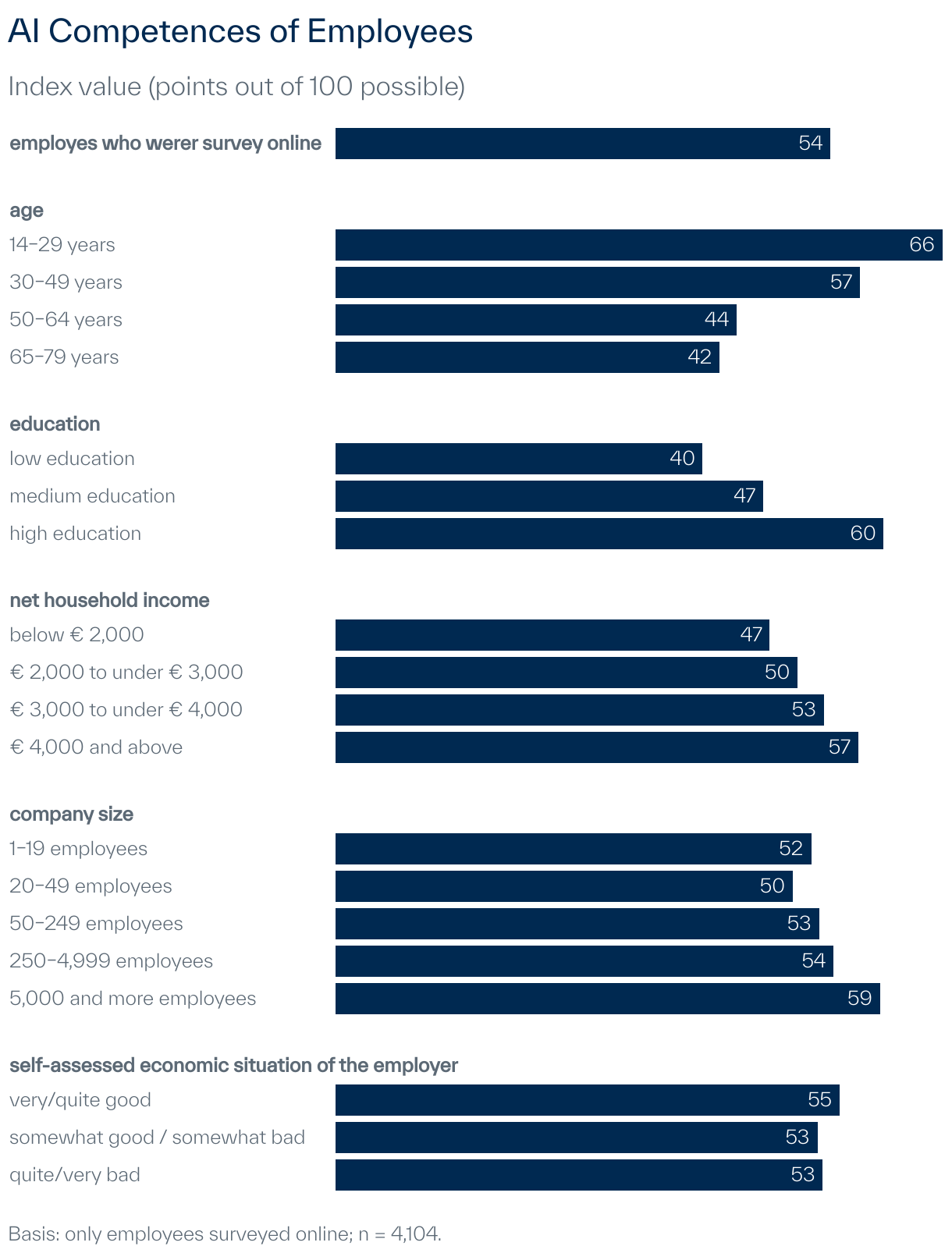
The majority of employees in Germany see digitalisation as an opportunity for their company. At the same time, a third criticise the lack of attention paid to the topic. The same applies to generative AI, the professional use of which is becoming increasingly widespread, but which receives little attention as a topic in many companies. Differences in digital competences are also evident among employees in terms of both general digital competence and AI competence. This is especially problematic in connection with the fact that employees with low digital competence in particular rate their employer’s training programmes as poor. Companies should therefore take greater responsibility by creating targeted further training programmes for employees with low digital competence, providing low-threshold advice and creating time and financial scope for further training.
Klicken Sie auf den unteren Button, um den Inhalt von Datawrapper zu laden.
Further information
Here you can find further links: on the one hand, to a more detailed and in-depth examination of the results; on the other hand, on the website of the Süddeutsche Zeitung (SZ), a test is available to assess your own competency levels.
For the compact version


