


The eleventh bidt survey wave on working from home (23 February–9 March 2026) provides an overview of current usage patterns and the attitudes of internet-using workers towards working from home. Additionally, an international comparative survey (28 January–2 March 2026) shows where Germany ranks in terms of working from home usage.
Working from home in early 2026
The eleventh survey by the Bavarian Research Institute for Digital Transformation (bidt) as part of the research project ‘Prevalence and Acceptance of Working from Home in Germany’ examines the prevalence of working from home in early 2026. Between 23 February and 9 March 2026, a total of 2,106 internet-using employed adults were surveyed online by the market research institute Reppublika Research & Analyticsusing quotas for gender, age, education, and Nielsen regions. The results were additionally weighted to ensure representativeness for internet-using employed people with regard to gender, age, education, and Nielsen regions.
In addition to questions on usage behaviour, the survey also examined attitudes towards working from home, including reasons for working on-site at the employer’s premises or from home, as well as assessments of the financial value of working from home. Alongside the data collected here, findings from the bidt Digitalbarometer.international 2026 are also presented, featuring representative online surveys of between 474 and 738 employed respondents in each of the following countries: France, Italy, Spain, Finland, the United Kingdom, the United States, China, and Taiwan, comparing usage behaviour internationally. This survey was conducted between 28 January and 2 March 2026.
Overview
The use of working from home has risen slightly again compared to October 2024 and is now somewhat above the level recorded at the beginning of the COVID-19 pandemic. The proportion of those who are satisfied with their working-from-home situation remains very high.
Klicken Sie auf den unteren Button, um den Inhalt von Datawrapper zu laden.
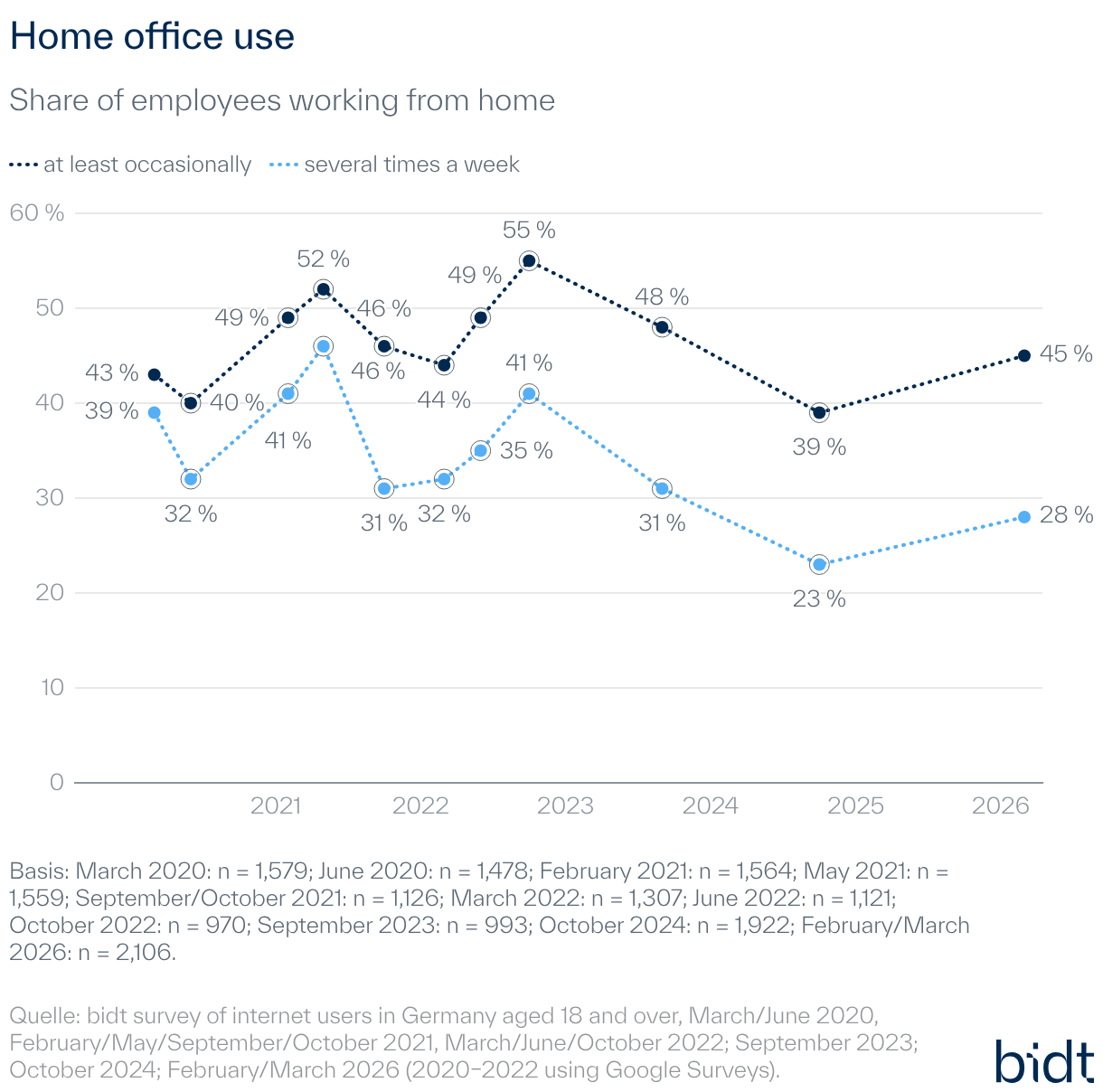
Even though there sometimes is a discrepancy between employees’ desire to work from home and their employers’ permission to do so, on the whole, those in employment whose roles allow it are spending as much time working from home as they would like. Satisfaction with the home working options offered by employers is correspondingly high.
Klicken Sie auf den unteren Button, um den Inhalt von Datawrapper zu laden.
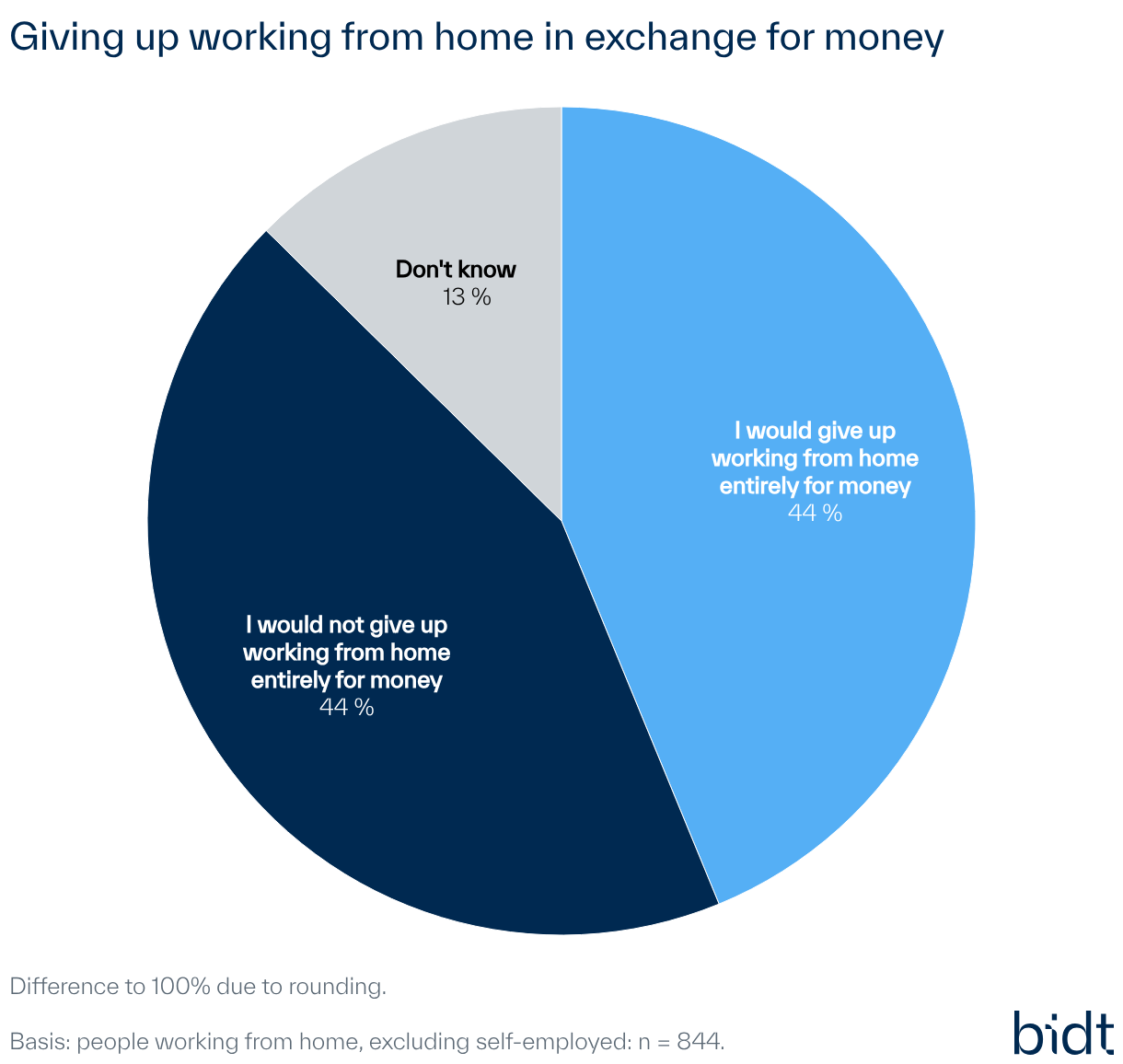
Fewer than half of those who work from home would be willing to give up working from home entirely in exchange for a pay rise. forgo working from home in return for additional pay decreases as the frequency of home working increases.
Around one third of employed people who spend less working time at home than their jobs would allow could imagine accepting a reduction in salary in exchange for one additional day of working from home.
Klicken Sie auf den unteren Button, um den Inhalt von Datawrapper zu laden.
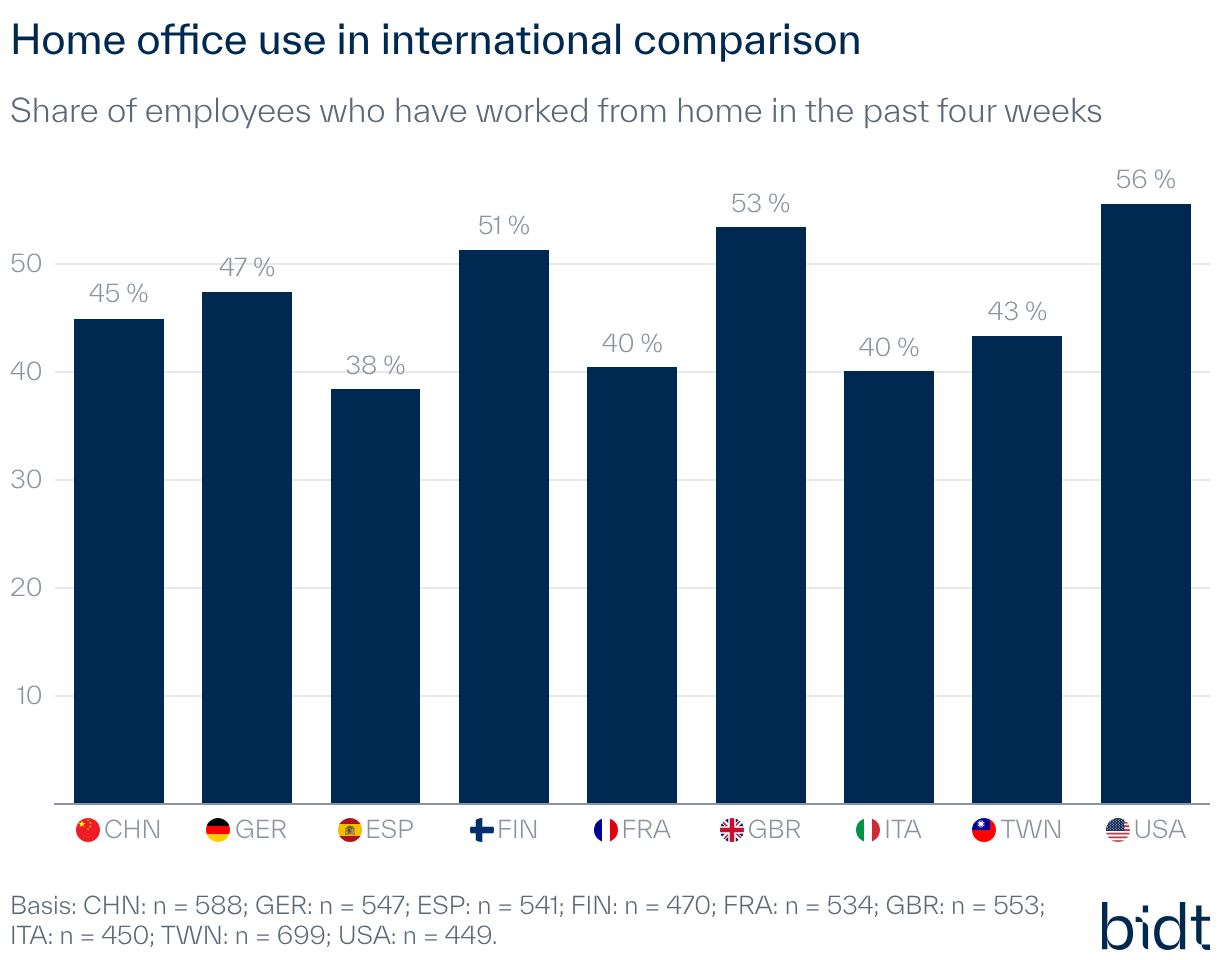
Both in terms of the prevalence of working from home and the proportion of working time carried out from home, Germany ranks in the upper middle range in comparison with eight other countries.
Methodology


