

Topic: Digital responsibility
The digital transformation in all areas of life leads to ethical and legal issues when digital technologies are used for the common good, ranging from ensuring digital participation to data security.
Lecture series: UNESCO Recommendations on the ethics of AI
This year’s public lecture series on digitalisation is specifically dedicated to the topic of digital sustainability.
Lecture series: Digital Sustainability in Artificial Intelligence
This year’s public lecture series on digitalisation is specifically dedicated to the topic of digital sustainability.
Lecture series: Sustainability, Competitiveness and Business Models
This year’s public lecture series on digitalisation is specifically dedicated to the topic of digital sustainability.

Artificial intelligence in court
The use of algorithms and AI by the police to avert danger is controversial. Now, for the first time, the Federal Constitutional Court has taken a comprehensive position on the matter.
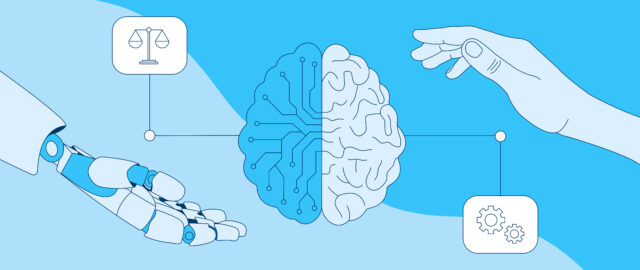
Talking about the “What?” and “How?” of AI ethics
In this blog post, Jan Gogoll explains why it is becoming increasingly important for systems incorporating AI to be designed in an ethical and responsible manner.

DIGHUM lectures: On Chat-GPT
The initiative DIGHUM lectures started with regular online events to discuss the different aspects of Digital Humanism. The bidt and the TU Wien are cooperation partners for DIGHUM lecture series.
DIGHUM lectures: Seize the Means of Computation
The initiative DIGHUM lectures started with regular online events to discuss the different aspects of Digital Humanism. The bidt and the TU Wien are cooperation partners for DIGHUM lecture series.
DIGHUM lectures: Abstracted power and responsibility
The initiative DIGHUM lectures started with regular online events to discuss the different aspects of Digital Humanism. The bidt and the TU Wien are cooperation partners for DIGHUM lecture series.

WELT guest article: How ethically (un)problematic is ChatGPT?
In a guest article in the WELT, Julian Nida-Rümelin and Dorothea Winter discuss how ethically (un)problematic the speech synthesis system ChatGPT is.